
- HOME
- PRODUCTS
- A Familiar Find
- A Familiar Problem
- Candela Obscura
- Caper Cards: Bells Hells
- Daggerheart
- For the Queen
- Queen by Midnight
- Queen by Midnight: Quarter Past
- Solar Gardens
- Tal’Dorei Campaign Setting Reborn
- Till the Last Gasp
- Uk’otoa
- Vox Machina Art Books: The Chronicles of Exandria Vol I
- Vox Machina Art Books: The Chronicles of Exandria Vol II
- SHOP
- LOCATE STORE
- BLOG
- NEWSLETTER
- EVENTS
- CONTACT US
Reflecting on Homebrew in Daggerheart with The Bards of New York
- Blog
-
Nov 10
-
12 min read
- Share post
If you’ve been following The Bards of New York‘s mini-series, Voltaire’s Aces, you’ll know that they’ve taken their characters on a seat-of-your-pants thrill-ride using Daggerheart mechanics within their existing homebrewed world. That series is entering its final stretch of episodes (you can still catch the final three episodes of the series on Nov. 7, Nov. 21, and Nov. 28 on the Bards’ YouTube channel), so we sat down with the Bards to talk about that experience now that the series has gotten deep into their world’s lore.

What advice would you have for a GM setting out on their first homebrewed Daggerheart campaign?
Lean into the “Rule of Cool”! Lean into the soft magic of it all! You won’t regret it. Wow each other with your whimsy! As a GM, you may have something in mind, but your player may come up with an incredible idea you would’ve never thought of! Don’t be afraid to bargain. At Bards of New York, we’ve always been big on making deals with your players when what they want to do is outside the scope of the mechanics. Daggerheart makes it even easier to do it! Your players have plenty of things to spend — like Hope and Stress — to accomplish something they wouldn’t ordinarily be able to do.
The mechanics of Daggerheart are there to facilitate the story. So, allow yourself to be inspired and flavor the mechanics for however you need for the story and the table’s enjoyment! To quote the homebrew world that inspired Will to write his own, “Magic is meant to serve man, Not to rule over [them].” Daggerheart’s approach to rules-as-written is much the same. They are there to serve the story you and your table are collectively telling, not the other way around!
In Daggerheart, it really feels like the game is saying 'Hey friend, we’re not expecting you to know everything. Here’s what you absolutely need. Meet us with an incredible idea, and we’ll make sure the mechanics work for you!'
The Bards of New York
The core rulebook encourages and invites you to homebrew, but the whole kit is modular by design. If you have an idea for a subclass, or adversary, or magic item in your homebrew world that the rules-as-written don’t reflect, switch some things around! Swap what domains a class has, give a magical weapon a different ability or usage trait, re-flavour Mothman into an undying siren! The more creative and flexible you are, the more the system will respond to you and your table in kind.
Remember, it’s called a game for a reason. Have fun!
Now that you’ve had some time homebrewing a world with Daggerheart, what about the system do you think makes it suitable for telling diverse stories?
Daggerheart gives players agency with creating characters that don’t feel hemmed into classes, species, stereotypes, etc. The game devs of Daggerheart have created a game that is delightfully setting agnostic. The core mechanics aren’t even a little bit flavoured by a fictional world the rules were initially designed to populate. Particularly with the experiences and backstory mechanics, the system allows for you to bring your truly unique ideas and concepts to the game in a way that doesn’t feel shoehorned-in or forced. There isn’t a single feature, rule, or design element we’ve encountered in Daggerheart that doesn’t want to be reflavored to suit your narrative needs — even right down to a PC’s ancestry!
The game wants you to make it bespoke for the story you want to tell. The system is lowkenuinely elegant in its ability to circumvent the problem we often run into with other systems: you have to choose between two or more really cool ideas. Somehow, you rarely have to do that in Daggerheart and the mechanics still matter and work!
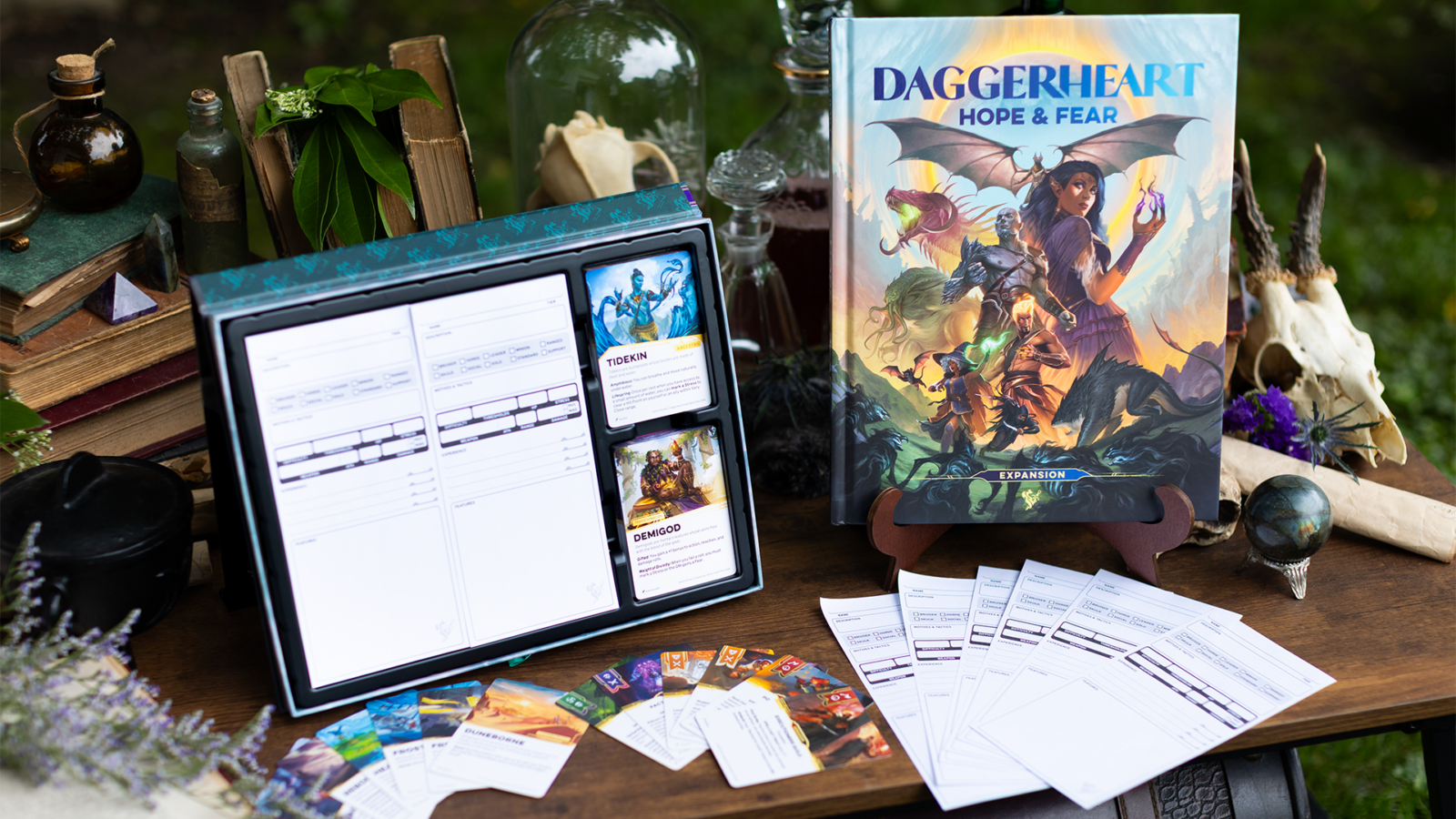
The mechanics of Hope and Fear also allows for a dynamic, collaborative session. Inherently, the ball is always bouncing between the players and GM as we swing between Hope and Fear rolls. This allows for the passing of the spotlight in an almost impartial way, since it’s being left up to the dice a lot of the time. But then you have such wonderful one-time use domain cards that the players can implement to steal the spotlight away from the GM during clutch moments (check out Chapter 6 of Voltaire’s Aces for an excellent example of exactly this).
Daggerheart also encourages and allows accessibility and diverse stories with disability representation in the actual rule book and discussions on how to do so thoughtfully and intentionally. You can tell this system was written with a lot of love, care, and flexibility for those who will tell stories via this medium.
How does Daggerheart help facilitate and encourage roleplay between players?
It’s built into the foundations of this game! From domain cards like healing spells where you can give someone more HP if you learn something important about the other person, to downtime moves that can be done together to advance projects — which will naturally lead to multiperson scenes, discussions, and collaboration on ideas!
In Daggerheart, the roleplay and storytelling doesn’t end when the fight begins! Heroes and villains are forged in the fights! Combat is never just combat. It should advance the narrative and understanding of the characters as much as the moments before and after. To blend our Bardic hyperfixations: In a musical, a character starts singing when they simply cannot express their feelings or progress the story meaningfully enough through spoken words alone. The same is true of the best dynamic fights in anime, myth, and fiction. Combat should feel like an intensified expression of the story you were already experiencing, not just a video-gamified XP farm. Similarly, like in intimacy coordination, the storytelling doesn’t stop when an intimate scene begins in any type of medium. We should still be advancing understanding of plot, character, etc. Once again, the same should happen with combat!
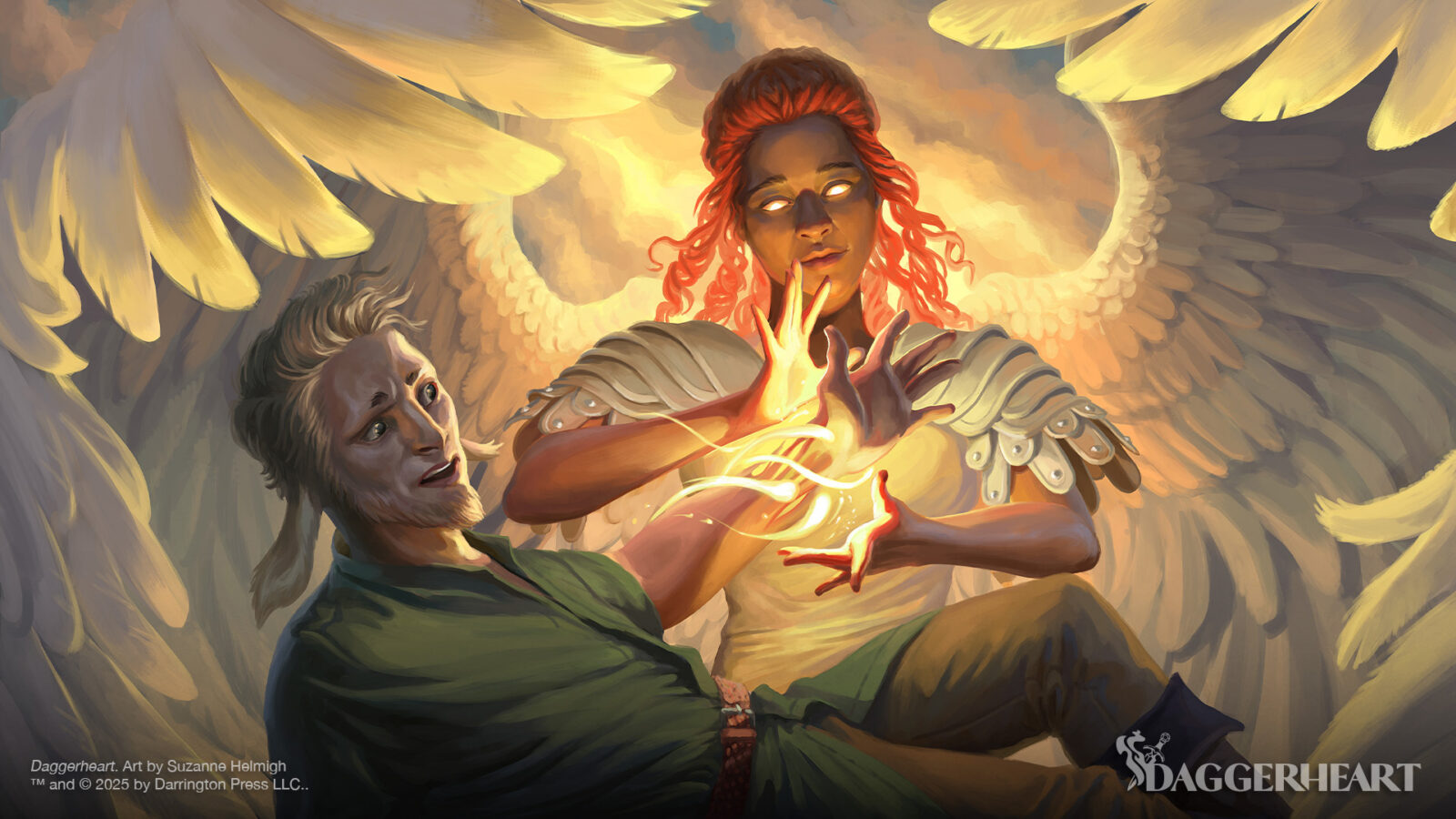
In Daggerheart, the combat system is literally an extension of the same systems you’ve been using for roleplay and exploration. It encourages you to think about a battle with the same creativity and reactivity that you would in a tense dramatic scene or the exploration of a dungeon. Chapter 2 of Voltaire’s Aces showcases some brilliant examples from our players on how thinking laterally about a TTRPG fight, and approaching combat like weaponised roleplay can enhance a session like nothing else! Every time we’ve had to do combat during Aces, we’ve left the table absolutely buzzing!
Special mention to two of our faves in the combat mechanics:
- The absence of any sort of initiative order during combat!
- It really gives players more control over when and how to engage, rather than lots of “I am holding my action for XYZ”. It’s made it really fun. Just remember to be aware of your other players to make sure they’re getting the spotlight too!
- Tag team moves!
- This brilliant mechanic allows you to work together with your other characters to achieve those incredible team up moments we love in media. All you need is enough Hope to spend and a creative idea on how to team up! Who will you help? Will you work alongside others in order to do more together than you ever could alone? It’s no fun to play with yourself! Tag team your friends!
What was the process like for porting over specific characters, events, and items into Daggerheart like, now that you have gotten deep into the lore of Regolus Prime?
The benefit of having such deep, pre-existing lore (and in some cases, mechanical counterparts in other TTRPG systems) means that we have a really strong “template of vibes” for how certain concepts and characters from Regolus should feel on table. Marrying this with Daggerheart’s brilliantly modular nature, and its simple, inviting approach to homebrew, meant that all it took for us to be able to near-seamlessly port Regolus over to Daggerheart was us getting initially familiar with the system! Once we’d done that, it was just a matter of finding which modular pieces of the Daggerheart toolkit best matched the element getting ported over. Gets us thinking about how seamlessly some of our other worlds could port over!
We have a great episode on our Patreon where Will explains how he ported Damien, our GMPC, over from the system we used in Regolus: Dark Age to Daggerheart!
Is your approach to roleplay and story weaving any different when using Daggerheart rather than playing within other TTRPG systems?
Truthfully, Daggerheart as a system feels like it was made in a lab to tailor to the story-first, rule of cool way of roleplaying we’ve always prided ourselves on at Bards. Like trying on a perfect pair of jeans. If anything, we’ve found ourselves having to brute force game mechanics far less than in other systems. Daggerheart is always primed for us to make the most interesting choice available and the system will react in kind. So, our approach isn’t different exactly, more that our storytelling style is more in-sync with the system than we ever could have been prepared for!
Are there any Daggerheart mechanics, items, or classes you have yet to try, but hope to in future?
Oh the list is so long! Please can one of our Aces die so they can try out the Ghost transformation?!? We’re not asking for the moon!
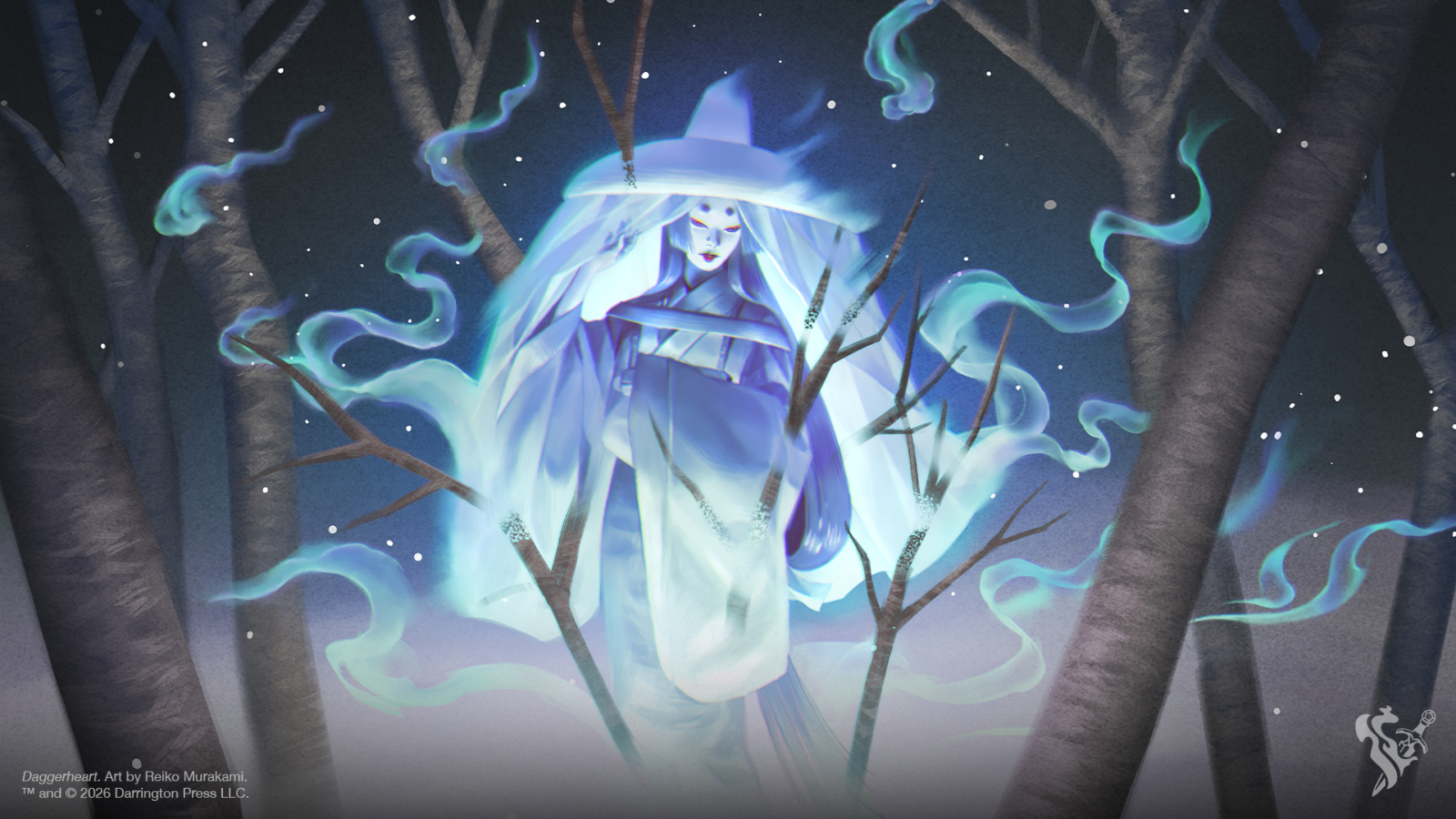
Seriously though, we love the transformations! The fact that you can have a transformation on top of your other character stats is so elegant. In other TTRPG systems, you have to choose. In Daggerheart, you can have your cake and eat it too!
All of the different classes have given our Bards so many ideas on future characters. We know Rachel hopes to try out the Assassin class at some point and Hannah dreams of one day living her best Witch life.
Tell us about how you have used the Card Creator tool, and how you incorporated that in-game!
Oh wow! It’s such a cool tool! The Card Creator really drove home something for us that we couldn’t put into words till we started using that tool! In a lot of TTRPGs, you often feel as if you need to be an expert in the game before you even touch homebrew. In Daggerheart, it really feels like the game is saying “Hey friend, we’re not expecting you to know everything. Here’s what you absolutely need. Meet us with an incredible idea, and we’ll make sure the mechanics work for you!”
In a recent video on our socials, Will explains how he created a homebrewed adversary using the Card Creator. The fact that he could explain it in under 3 minutes is a testament to how user friendly and homebrew-positive the Card Creator and Daggerheart are!
How would you describe the emerging themes of Voltaire’s Aces as the story has unfolded over time?
On the Prime, everyone is the hero of their own story. But that doesn’t mean your deeds are inherently good or harmless. Not everything basking in the Sun’s Grace is good and not all that dwells in darkness is evil. Every light must cast a shadow, after all. It’s all a matter of perspective. And with that perspective comes the question of: how firmly do you cleave to your convictions when facing down concepts or creatures that work to disrupt the gilded point of view your character has of their morality?
Our Aces will ultimately come into contact with the very beings who built the world they call home. When facing such divinity, they will have to be sure in their convictions, lest they fall victim to Grace or Godsleep. Both forces of nature not for the wishy-washy.
What can you tell us about what the future holds for the Bards of New York?
Ahh so much is on the horizon! How do we say epic love stories, tragic deaths, and swinging for the fences RP? I believe it’s called BONY! We will be doing more in-person events like cons and live shows and we’ve got some fun collabs on the way we can’t discuss just yet, but we are VERY excited to share them with y’all soon, so watch our spaces to stay up to date on all things Bards of New York!
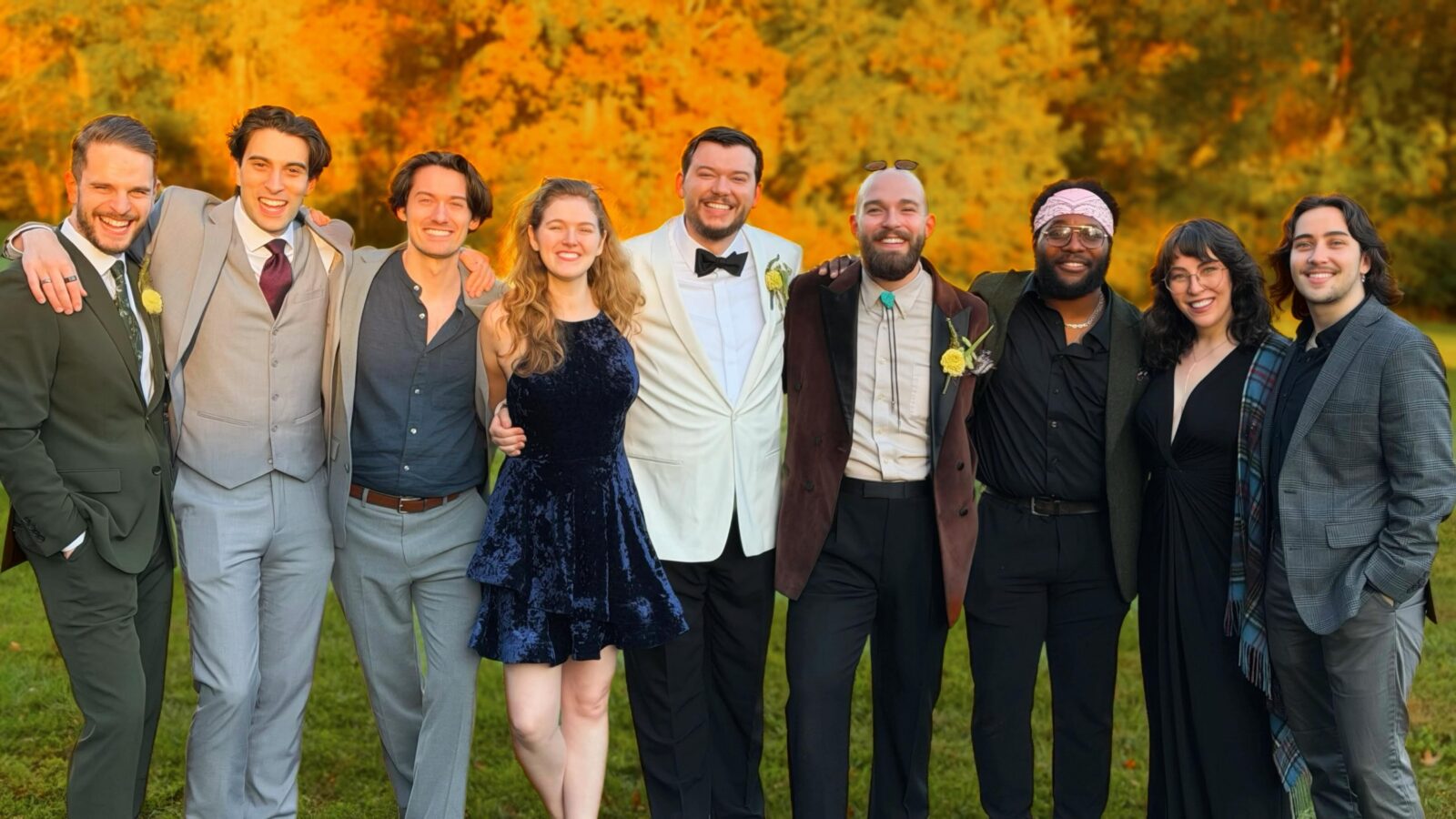
On the immediate horizon for us, Gilded Thrones, the story we’ve been telling since July 2025, is reaching its climax! A web of courtly intrigue, mystery, romance, dismantling generational trauma, and magical fae machinations is coming to a head at a political wedding…which threatens to fall apart just days before the ceremony.
As we look toward next year, a return to Regolus and the infamous Golden Sentinels is simply a matter of time (and depending on how well Voltaire’s Aces can do their job)! The story we began telling in Tome I of Regolus: Dark Age needs its conclusion, but we can only begin Tome II once we see exactly how the Aces intend to free our former player characters. So be sure to keep your eyes peeled for a return to Regolus: Dark Age Tome II in 2027!
We are spoiled over at Bards of New York! With multiple worlds to explore in multiple campaigns with different game masters, there is truly something for everyone! Whether you like political intrigue, historical mysteries, fae, dark shonen anime fights, nightmare inducing creatures, the power of friendship, or a healthy dose of romance, Bards of New York is weaving a myth for you!
Check out Voltaire’s Aces, a ten✨ish✨ episode sponsored miniseries on The Bards’ Twitch and YouTube channels! The series also features some of the new content from Daggerheart: Hope & Fear, like new classes and mechanics — so be on the lookout!